Shipping Guide · Updated November 2026
Durban Port Delays: Why a Throughput Rebound Hasn't Cleared the Queue (Updated November 2026)
In the week ending 1 November 2026, South Africa's container terminals lifted 20% more boxes. That figure comes from Cargo Movement Update No.306, the weekly report compiled by the South African Association of Freight Forwarders (SAAFF) and distributed by Business Unity South Africa (BUSA).
Quick answer: In the week ending 1 November 2026, South Africa's container terminals lifted 20% more boxes. That figure comes from Cargo Movement Update No.306, the weekly report compiled by the South African Association of Freight Forwarders (SAAFF) and distributed by Business Unity South Africa (BUSA).
SAAFF's same issue also says an affected shipment can still face close to 20 extra days between the ship arriving and the goods reaching the warehouse.
A TEU is the unit used to count containers: one 40 ft box counts as two. It counts how many times a crane lifts a box between ship and shore. It says nothing about boxes sitting in the yard, trucks failing to get a booking slot, or cargo queuing on the road inland. Moving a box off the ship and handing it to the consignee are two different jobs.
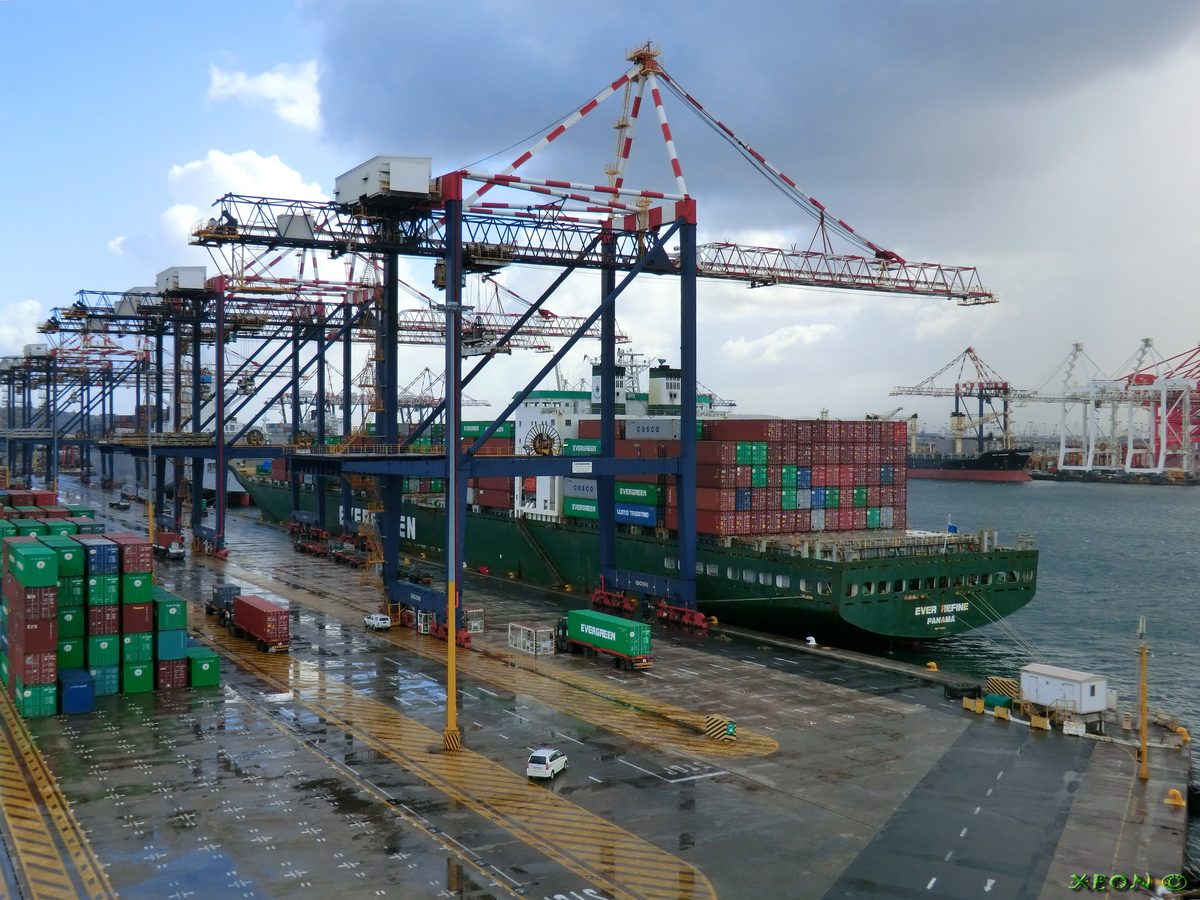
This guide is for cargo shipped from China, discharged at Durban, especially at Durban Gateway Terminal (DGT, known locally as Pier 2), and then moved inland. Cargo discharged at Cape Town or Port Elizabeth is not on this chain.
On 15 August the terminal switched to a computer system called Navis N4. For about 12 hours, both ship-side and land-side work stopped. Ships then queued at anchorage (the area outside the port where a vessel drops anchor until a berth is free), import boxes piled up in the yard, trucks queued for collection slots, and the consignee held the container past its free time. Detention charges and the warehouse delivery date moved back together.
On 2 November Maersk raised its Durban import free time from 4 days to 5, giving the reason as "the congestion being experienced in Durban". If the port were already recovering, why would a carrier hand importers an extra day?
- South African terminals lifted 100,423 TEU that week, up 20%; DGT lifted 34,976 TEU, up 12%. Both figures are from SAAFF/BUSA Cargo Movement Update No.306, for the week ending 1 November 2026.
- In the same week, ships calling at DGT waited an average of 266 hours at anchorage — about 11 days. That is an improvement on 314 hours, but still well over a week.
- The queue did not shrink with the throughput. DGT had 11 ships waiting on 2 November and 15 on 3 November; yard utilisation was 70%, with 3,835 landed import boxes still on site.
- Maersk's import free time goes from 4 days to 5 until 31 December 2026, then back to 4 on 1 January 2027.
- "Waiting time" comes in several versions that week: 7.46, 7.54, 8.3, 11.1 and 12 days. They count different ships over different periods; keep them side by side rather than picking one as the answer.

Throughput Is Up. Why Is the Queue Still There?
| The number in the news | What it actually counts | What it does not tell you |
|---|---|---|
| 100,423 TEU (week, +20%) | Boxes lifted from ships at South African terminals that week | When your box was collected |
| 34,976 TEU (DGT, +12%) | Boxes DGT lifted that week | Whether the anchorage queue got shorter |
| 266 hours (about 11 days) | Average wait for a berth after arrival at DGT | Your shipment's warehouse date |
| About 20 days | SAAFF's estimate of time added across the affected supply chain | Not every shipment, and not just the anchorage wait |
Think of DGT as a supermarket checkout. The cashier scanned 12% more goods that week (34,976 TEU), yet the queue outside went from 11 ships on 2 November to 15 on 3 November — four more. Scanning speed is how much work got done in a week; queue length is how much work is still owed. With new ships arriving and the backlog uncleared, the queue stays. The two figures were measured on different days, so use them for direction, not subtraction.
Jacob van Rensburg of SAAFF did the arithmetic too: at roughly 3,381 moves a day (a "move" is one physical box handled by the terminal), the backlog alone adds about 19.5 days to the supply chain. Clearing it within a month while absorbing new arrivals would take about 5,000 moves a day, against DGT's own target of 3,400. He notes the model assumes no new ships join the queue — in practice they do.
DGT sent customers a notice dated 7 August 2026: the new system would go live at 18:00 on 15 August, with about 12 hours of no vessel work, no land-side work and no truck slots. South African news site Daily Maverick reported that between mid-August and 10 September the terminal handled about 30% less volume than its previous four-month average.
Five Handoffs Between the Ship and Your Warehouse
| Where it stalls | Who runs it, and from when | What it starts costing | One thing you can check now |
|---|---|---|---|
| Anchorage wait | The terminal allocates berths; your carrier issues arrival updates. Starts when the ship reaches anchorage. | Tied-up cash and a missed sales window, not an invoice | Ask the carrier for arrival and berthing updates; plan in weeks, not days |
| Discharge | DGT schedules work through the new system; go-live 15 Aug 18:00, about 12 hours of stoppage | Covered by freight and terminal handling charges | Check whether the bill of lading names DGT as the discharge terminal |
| Box waiting in the yard | It enters the yard once discharged; utilisation was 70% that week | Demurrage once free time runs out | Finish clearance and release early so paperwork is not the reason it sits |
| Truck slot and inland move | Your transport provider books a slot with the terminal; South Africa's Transport Minister said on 29 October the system change affected truck bookings | Trucks and warehouse staff idle; a missed slot pushes everything back | Put the slot, the carrier and the warehouse receiving window on one calendar |
| Unpacking and empty return | The consignee's side; free time moved from 4 to 5 days | Detention once free time runs out | Schedule unpacking and empty return together, and check each item against shipping cost structure |
Yard utilisation of 70% does not mean "30% of the yard is free, so collection is easy". Boxes fit, but that says nothing about whether a truck can get a slot. Kuehne+Nagel's weekly port report for late October to early November adds another cause: two ship-to-shore cranes at the neighbouring Pier 1 had been out of action for some time, and DGT moved water-side gangs over to help clear the land side, which can slow ship-working again. SAAFF's report also shows rail out of Durban up 40% that week while border crossing times rose by about 30% — one end easing, the other tightening.
Three terms worth separating: waterside throughput counts boxes lifted between ship and shore; yard utilisation is how many yard slots are occupied; a truck booking slot is the time window a truck must reserve before entering the terminal. The first two can rise while the third stays tight.
What Maersk's Extra Free Day Actually Covers
| Before | 2 Nov – 31 Dec 2026 | From 1 Jan 2027 | |
|---|---|---|---|
| Free time on Maersk import boxes discharged at Durban | 4 days | 5 days | Back to 4 days |
Free time is the number of days a carrier lets you use its container at no charge. Boxes that overstay inside the terminal incur demurrage; boxes already collected and overstaying outside, in the consignee's hands, incur detention. Maersk changed the second one — the window between collection and empty return. It does not change the anchorage wait, the yard wait or the truck slot.
That extra day means "one more day before the empty box is due, with no charge". Who pays depends on the sales contract: under CIF or DDP the destination charges sit with the shipper anyway; under FOB it depends on what was agreed with the buyer. In plain terms, those terms set out which side pays freight and destination costs — the Incoterms and importer of record guide walks through the split.
Maersk's advisory does not say which day the 5-day clock starts. Its Dutch local information page starts detention when the full box leaves the terminal; its Curaçao page starts combined demurrage and detention on the discharge date. Check your bill of lading and the carrier's local D&D tariff for the start date and for the actual amounts.
Which Waiting Time Is the Right One, and How to Put It on a Calendar
| Figure | Who published it, and over which days | What it measures |
|---|---|---|
| About 7.46 days | Kuehne+Nagel's Durban focus note of 2 November, preceding 7 days | 7-day average wait at anchorage |
| About 7.54 days | Kuehne+Nagel's weekly report, 27 October – 3 November | The same measure, one issue later |
| 8.3 days | South Africa's Transport Minister, visiting DGT on 2 October | That day's terminal average, against a 24-hour target |
| 266 hours (about 11 days) | SAAFF's Cargo Movement Update No.306, week ending 1 November | DGT average at anchorage, down from 314 hours |
| About 12 days | SAAFF's van Rensburg, quoted in the press | One report only |
| About 20 days | SAAFF's Cargo Movement Update No.306 | Time added across the whole supply chain, not anchorage waiting |
These figures are not in conflict because they do not count the same thing: some average seven days, some are a one-day snapshot, some cover only DGT, and one covers the entire chain. Keep all of them; do not use one to dismiss another. For your own shipment, check the discharge terminal on the bill of lading and ask the carrier for arrival and berthing updates — published averages do not replace those.
South Africa's Transport Minister flew to Durban on 29 October and counted 39 ships offshore; after checking with South African state rail and ports company Transnet, she confirmed only 8 of them related to DGT. Every ship outside the port is not the backlog of one terminal.
For a calendar, keep the figures you have separate from the ones you do not.
| Step | Do you have a number? | How to put it on the calendar |
|---|---|---|
| Anchorage wait | Yes: 266 hours ÷ 24 ≈ 11 days | Allow about 11 days from day 0 — an average, not a promise |
| Discharge, yard wait, truck slot | No public figure for how long one shipment waits | Leave it blank; wait for the carrier and trucker to give dates rather than filling it with an average |
| Border crossing | Yes: about 11.6 hours, roughly half a day | Only for that leg |
| Unpacking and empty return | Yes: 5 days free time | A deadline, not a waiting period |
| Whole chain | Yes: SAAFF says about 20 days | Use it as buffer when working back from the shelf date |
The easiest mistake is adding 11 days, half a day and 5 days to get "about 17 days", then comparing that with 20. Do not add them: one is an anchorage average, one is a border crossing, one is a free-use allowance, and 20 days describes the whole chain. They are not one ledger.
Work backwards: fix the date the goods must be on the shelf, then set the warehouse date, inland move, truck slot, expected berthing, and finally leave a buffer of "about 20 days" for the Durban leg. Lane days in the ocean freight transit times guide are a normal baseline; this leg needs its own buffer.
How Bad Is This Compared with 2023–24, and Who Can Ignore It
In November 2023 Durban had 4,350 containers backed up and 65 ships waiting. After the South African government and Transnet began meeting daily, by February 2024 the queue was down to 10 ships and the backlog to 1,738 containers. Those are the figures in a 22 March 2024 report from the US Department of Agriculture.
The two episodes are not directly comparable: the earlier one reported ships and boxes, this one reports hours at anchorage and days added. What does compare is the recovery time. Daily coordination cleared the earlier backlog in two to three months; this time the Transport Minister said on 29 October that new handling equipment arriving in December would bring gradual improvement into January–February 2027, and Kuehne+Nagel's 2 November note points to the end of Q1 2027. Both fall after Maersk's extra day expires on 31 December.
Shipments discharged outside Durban do not inherit these 20 days. SAAFF's report shows Cape Town volume up 76% that week with an average anchorage wait of about 1 hour, and Port Elizabeth up 204%, possibly taking cargo diverted from Durban. Whether to change ports still depends on where the goods are going and what inland transport costs — congestion at Durban alone is not a reason to switch. Boxes already collected and returned have finished their free-time clock, so the extra day does nothing for them. Break-bulk, project cargo and ro-ro shipments that never use a container terminal do not pass through the anchorage-and-yard chain either.
One more line worth keeping clear: 4 days to 5 is Maersk's temporary measure for its own import customers, not a new Durban port rule, and export boxes are outside it. "About 20 days" applies to affected supply chains, not to every shipment.
Sources
- https://www.maersk.com/news/articles/2026/11/02/durban-import-detention-free-time-increase — Maersk, 2 November 2026: Durban import free time 4 → 5 days, until 31 December, reverting 1 January
- https://africaports.co.za/2026/11/07/africa-ports-ships-maritime-news-1-2-november-2026/#12089 — SAAFF / BUSA, Cargo Movement Update No.306 – 1 November 2026, reproduced in full by Africa Ports & Ships on 7 November 2026: 100,423 TEU, 34,976 TEU, 266/314 hours, 70% and 3,835 boxes, about 20 days
- https://mykn.kuehne-nagel.com/news/article/port-operational-updates-from-03-11-2026 — Kuehne+Nagel myKN weekly port report, 27 October – 3 November 2026: 7-day average Durban wait of 7.54 days; Pier 1 crane outages
- https://mykn.kuehne-nagel.com/news/article/durban-congestion-remains-severe-as-vessel — Kuehne+Nagel myKN Durban focus note, to 2 November 2026: 7.46 days; improvement expected by end of Q1 2027
- https://africaports.co.za/2026/11/07/africa-ports-ships-maritime-news-1-2-november-2026/#12101 — Africa Ports & Ships, reporting South African Transport Minister Barbara Creecy's 29 October 2026 remarks: 8.3 days against a 24-hour target, 8 of 39 ships linked to DGT, recovery into January–February 2027
- https://www.dailymaverick.co.za/article/2026-11-01-transnet-and-foreign-operator-face-scrutiny-over-backlog-at-durban-gateway-terminal/ — Daily Maverick: van Rensburg's 19.5-day estimate and 3,381 / 5,000 / 3,400 moves-per-day calculations, about 12 days, and the roughly 30% volume drop in August–September
- https://cdnweb-dgt.ictsi.com/users/user26/2026.8.7%20DGTUpdate%20on%20go-live%20execution%20plan.pdf — Durban Gateway Terminal / ICTSI customer notice, 7 August 2026, PDF: 18:00 go-live on 15 August, about 12 hours of stoppage
- https://apps.fas.usda.gov/newgainapi/api/Report/DownloadReportByFileName?fileName=Port+challenges+cause+ships+and+export+opportunities+to+pass+South+Africa+by_Pretoria_South+Africa+-+Republic+of_SF2024-0005.pdf — USDA Foreign Agricultural Service, GAIN Report SF2024-0005, 22 March 2024, PDF: 4,350 boxes and 65 ships in November 2023; 1,738 boxes and 10 ships by February 2024
- https://www.maersk.com/news/articles/2024/03/05/demurrage-detention-and-freetime-extension — Maersk, March 2024: plain-language explanation of free time, demurrage and detention
- https://www.maersk.com/local-information/europe/netherlands/import — Maersk local information pages (Netherlands / Curaçao): different start dates for the free-time clock — ; https://ewscpcd.maersk.com/de-de/local-information/latin-america/curacao/import
- https://maritimebizreview.com/?p=3282 — Maritime Business Review: independent restatement of No.306's 100,423 TEU, 14,346 TEU daily average and port-by-port growth
Information current to 8 November 2026. Anchorage waits, waiting-hour figures and the "about 20 days" estimate come from different organisations and different periods; they are shown side by side and are not added together. The SAAFF No.306 figures are cited from the Africa Ports & Ships full reproduction; the Daily Maverick page carries conflicting date labels, so its date is not used for sequencing. Charges are confirmed item by item against the carrier's local D&D tariff and the bill of lading; this is not a quote and does not promise an arrival date for any shipment.
Frequently asked questions
Throughput is up 20% — is Durban recovering?
Improving, but not enough to relax. SAAFF's Cargo Movement Update No.306 still puts the average DGT anchorage wait at 266 hours (about 11 days), and the queue rose from 11 ships to 15 on 3 November. The report's own conclusion is that operations have stabilised but have not systematically recovered. Faster discharge is good news; it does not answer when a box gets collected.
Does Maersk's extra day cut my detention bill by a day?
Only if you do exceed free time, and the excess falls on that added day. The 5 days run until 31 December 2026 and revert to 4 on 1 January 2027. The change does not touch demurrage while the box sits in the yard, nor the anchorage wait. Which day the clock starts is set by your bill of lading and the carrier's local tariff.
Which waiting-time figure should I use?
For trend, use the two Kuehne+Nagel 7-day averages. For your own shipment, check the discharge terminal on the bill of lading and ask the carrier for arrival and berthing updates. The 8.3 days is the Transport Minister's 2 October snapshot, the 266 hours is SAAFF's weekly DGT average, and the roughly 12 days appears in one Daily Maverick report only. None of them is a commitment on your booking.
Would switching to Cape Town or Port Elizabeth avoid this?
Some cargo is already moving that way. SAAFF's report shows Cape Town up 76% that week with an average anchorage wait of about 1 hour, and Port Elizabeth up 204%, possibly from diversion out of Durban. But a port change is a separate calculation: delivery point, inland distance and trucking cost all matter. Do not switch just because Durban is congested.
How should I set my delivery window?
Fix the date the goods must be on the shelf, work back through warehouse receipt, inland transport, the truck slot and expected berthing, and leave a buffer of "about 20 days" for the Durban leg. If unsure, send us the shipment date, destination, container type and cargo weight and we will give a conclusion shipment by shipment — you can run the numbers yourself first with the site's ocean freight transit times page.
Worried about a Q4 or January arrival window?
Tell us what you are shipping and where it needs to go. We will come back with a clear rate and a straight answer.